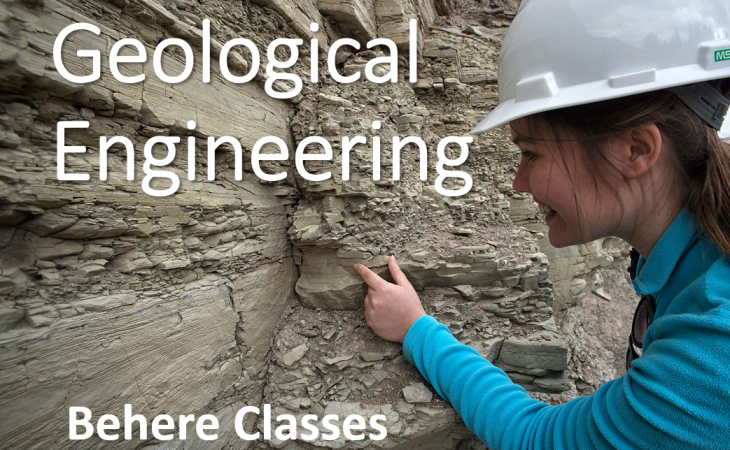
Geological Engineering
Geological engineering combines geology and engineering to address issues like infrastructure design, natural resource management, and hazard mitigation. Geological engineers work on projects such as mineral extraction and water supply, ensuring safety and environmental responsibility while
balancing innovation and ecological preservation.
Duration & Course Level:
- Bachelor's Degree: Usually takes 4 years to complete.
- Master's Degree: Generally takes 2 years beyond the bachelor's degree.
- Doctoral Degree (Ph.D.): Typically requires an additional 3-5 years after the master's degree.
Salary Package:
1. Geotechnical Engineer: $65, 000 - $120, 000
2. Hydrogeologist: $60, 000 - $110, 000
3. Mining Engineer: $70, 000 - $130, 000
4. Environmental Engineer: $60, 000 - $110, 000
5. Petroleum Geologist: $80, 000 - $160, 000
6. Seismologist: $70, 000 - $130, 000
7. Engineering Geologist: $65, 000 - $115, 000
8. Natural Hazard Specialist: $60, 000 - $100, 000
9. Geological Consultant: $70, 000 - $150, 000
10. Academic Researcher/Professor: $70, 000 - $150, 000 (varies significantly based on institution and tenure)
11. Geological Surveyor: $50, 000 - $90, 000
12. Soil Engineer: $65, 000 - $120, 000
13. Rock Mechanics Engineer: $70, 000 - $130, 000
14. Exploration Geologist: $70, 000 - $130, 000
15. Reservoir Engineer: $80, 000 - $150, 000
16. Tunneling Engineer: $70, 000 - $130, 000
17. Earthquake Engineer: $70, 000 - $120, 000
18. Coastal Engineer: $65, 000 - $115, 000
19. Sustainability Engineer: $60, 000 - $110, 000
20. Resource Geologist: $65, 000 - $120, 000
These figures are approximate and can vary based on specific job requirements, geographical location, and the economic climate.
Job Roles:
1. Geotechnical Engineer
2. Hydrogeologist
3. Mining Engineer
4. Environmental Engineer
5. Petroleum Geologist
6. Seismologist
7. Engineering Geologist
8. Natural Hazard Specialist
9. Geological Consultant
10. Academic Researcher/Professor
11. Geological Surveyor
12. Soil Engineer
13. Rock Mechanics Engineer
14. Exploration Geologist
15. Reservoir Engineer
16. Tunneling Engineer
17. Earthquake Engineer
18. Coastal Engineer
19. Sustainability Engineer
20. Resource Geologist
Education & Training Requirements:
1. Bachelor's Degree in Geological Engineering: Fundamental education in the field.
2. Core Courses in Geology: Courses covering mineralogy, petrology, and structural geology.
3. Mathematics Proficiency: Courses in calculus, statistics, and differential equations.
4. Physics and Chemistry Courses: Fundamental sciences that support engineering principles.
5. Geotechnical Engineering Coursework: Specialized classes focusing on soil mechanics and site investigation.
6. Hydrogeology Studies: Understanding groundwater flow and quality.
7. Environmental Engineering Principles: Learning about environmental impact assessments and remediation techniques.
8. Fieldwork Experience: Hands-on training through field studies and geological mapping.
9. Internships or Co-op Programs: Practical experience in a professional setting during undergraduate studies.
10. Master's Degree (optional): Advanced study for specialization in areas like rock mechanics or environmental geology.
11. Research Project or Thesis: Completion of a research project during a master’s program.
12. Professional Engineer (PE) License: Certification for practicing engineers, requiring examination and experience.
13. Fundamentals of Engineering (FE) Exam: Initial certification exam for engineers.
14. Principles and Practice of Engineering (PE) Exam: Advanced licensing exam for professional engineers.
15. Continuing Education Courses: Ongoing training to keep skills current and learn new technologies.
16. Technical Software Proficiency: Skills in using geological and engineering software tools (e.g., AutoCAD, GIS).
17. Laboratory Techniques Training: Experience in conducting laboratory tests on soil and rock samples.
18. Communication Skills Development: Training in writing reports and presenting findings.
19. Analytical Skills Enhancement: Development of problem-solving and analytical thinking abilities.
20. Teamwork and Collaboration Training: Experience working in multidisciplinary teams on projects.
Innovation & Creativity:
Innovation in geological engineering is crucial for managing resources and ensuring environmental sustainability. Engineers use advanced technologies like remote sensing and GIS to improve understanding of geological processes. Creative problem-solving results in designs that minimize environmental impact while optimizing resource extraction. By integrating sustainable practices, geological engineers develop resilient solutions that balance human needs with ecosystem preservation.
Behere Classes of Science & Commerce for 11th, 12th, PCMB, , CET, NEET, JEE, CAF
Behere Classes Best 11th 12th Science Commerce Coaching in Pune NEET JEE CET PCMB, CA Foundation