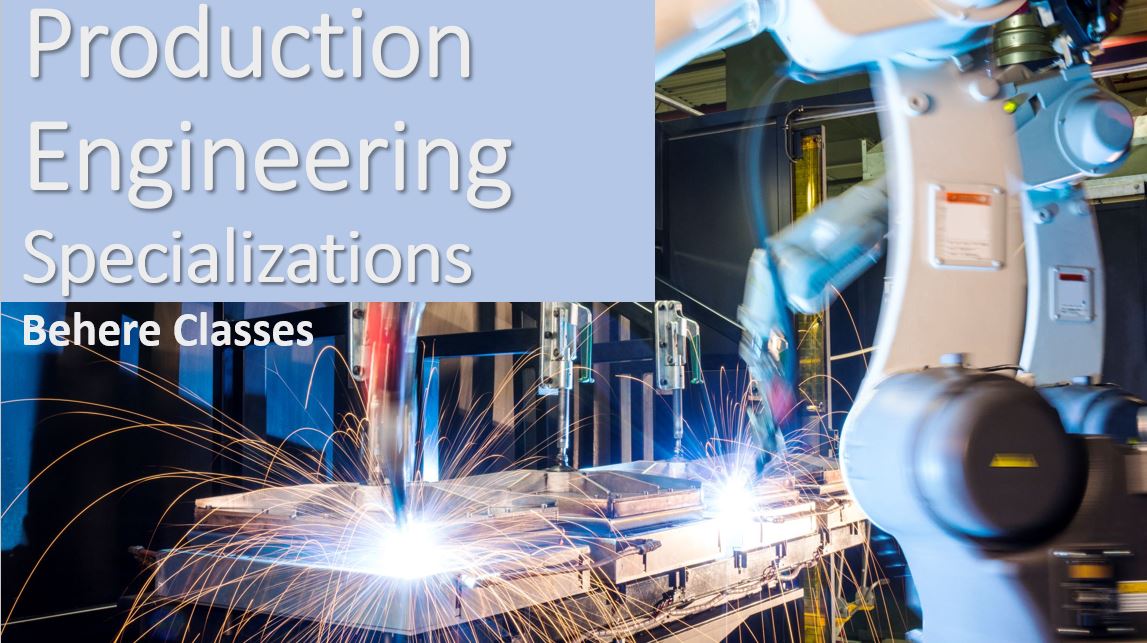
Exploring Specializations in Production Engineering
Sectors Encompassing Production Engineering:
1. Automotive Industry
2. Aerospace and Defense
3. Consumer Electronics
4. Machinery and Equipment Manufacturing
5. Energy and Power Generation
6. Chemical and Petrochemical Industry
7. Food and Beverage Processing
8. Pharmaceutical and Healthcare
9. Construction and Infrastructure
10. Textile and Apparel Industry
Duration & course Level:
1. Manufacturing Systems Engineering: Graduate-level program, 1-2 years for Master's, 3-5 years for Ph.D.
2. Supply Chain Management: Graduate-level program, 1-2 years for Master's, 3-5 years for Ph.D.
3. Quality Management: Graduate-level program, 1-2 years for Master's, 3-5 years for Ph.D.
4. Industrial Automation and Robotics: Graduate-level program, 1-2 years for Master's, 3-5 years for Ph.D.
5. Lean Manufacturing: Graduate-level program, 1-2 years for Master's, 3-5 years for Ph.D.
6. Operations Management: Graduate-level program, 1-2 years for Master's, 3-5 years for Ph.D.
7. Product Design and Development: Graduate-level program, 1-2 years for Master's, 3-5 years for Ph.D.
8. Industrial Engineering: Graduate-level program, 1-2 years for Master's, 3-5 years for Ph.D.
9. Sustainable Manufacturing: Graduate-level program, 1-2 years for Master's, 3-5 years for Ph.D.
10. Process Optimization: Graduate-level program, 1-2 years for Master's, 3-5 years for Ph.D.
Salary Package:
Providing exact salary figures for each specialization in production engineering can vary based on factors such as location, years of experience, industry demand, and additional qualifications.
1. Manufacturing Systems Engineering: $70, 000 - $120, 000 per year
2. Supply Chain Management: $60, 000 - $110, 000 per year
3. Quality Management: $60, 000 - $110, 000 per year
4. Industrial Automation and Robotics: $70, 000 - $120, 000 per year
5. Lean Manufacturing: $60, 000 - $110, 000 per year
6. Operations Management: $70, 000 - $120, 000 per year
7. Product Design and Development: $70, 000 - $120, 000 per year
8. Industrial Engineering: $60, 000 - $110, 000 per year
9. Sustainable Manufacturing: $60, 000 - $110, 000 per year
10. Process Optimization: $70, 000 - $120, 000 per year
These salary ranges are approximate and may vary based on factors such as location, level of education, industry demand, and additional certifications or specialized skills.
Specializations:
1. Manufacturing Systems Engineering
2. Supply Chain Management
3. Quality Management
4. Industrial Automation and Robotics
5. Lean Manufacturing
6. Operations Management
7. Product Design and Development
8. Industrial Engineering
9. Sustainable Manufacturing
10. Process Optimization
Education & Training Requirements:
After completing production engineering, individuals can specialize in various areas with the following education and training requirements:
1. Manufacturing Systems Engineering: Bachelor’s in Industrial or Manufacturing Engineering.
2. Supply Chain Management: Bachelor’s in Supply Chain or Operations Management; certification (e.g., APICS).
3. Quality Management: Bachelor’s in Quality Management or Industrial Engineering; Six Sigma or Lean certification.
4. Industrial Automation and Robotics: Bachelor’s in Mechanical, Electrical, or Mechatronics Engineering.
5. Lean Manufacturing: Bachelor’s in Industrial Engineering; Lean Six Sigma certification.
6. Operations Management: Bachelor’s in Operations Management or Business Administration.
7. Product Design and Development: Bachelor’s in Mechanical Engineering or Industrial Design.
8. Industrial Engineering: Bachelor’s in Industrial or Manufacturing Engineering.
9. Sustainable Manufacturing: Bachelor’s in Environmental or Sustainable Engineering.
10. Process Optimization: Bachelor’s in Industrial Engineering with a focus on process optimization.
Additional master’s degrees and certifications may enhance career prospects in these specializations.
Industrial Overview:
Production engineering optimizes manufacturing processes to ensure efficiency and cost-effectiveness. It involves process planning, quality control, and system maintenance across industries like automotive, aerospace, and electronics. The field focuses on improving production efficiency, reducing waste, and enhancing product quality, driven by advancements in automation, robotics, and smart manufacturing technologies.
Industry/field Future:
The future of production engineering will be driven by advancements in automation, robotics, and smart manufacturing technologies. Engineers will focus on integrating IoT, AI, and machine learning to create more efficient, adaptable, and sustainable production systems. Emphasis will be on reducing environmental impact and optimizing resource use, ensuring competitiveness in a rapidly evolving global market.