Article 2:
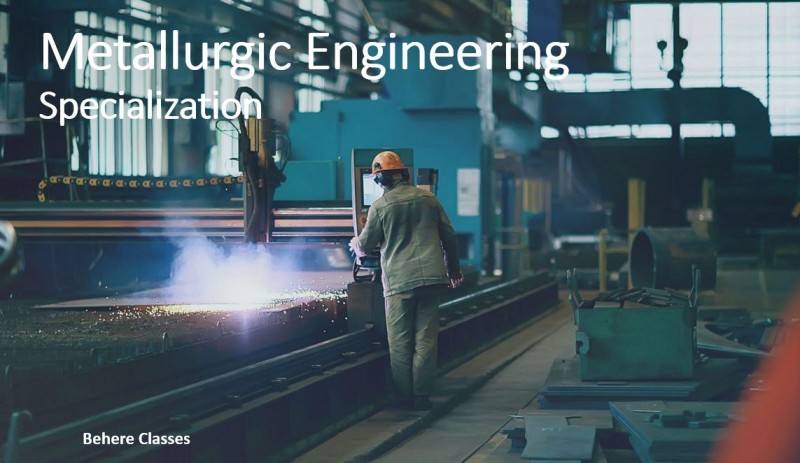
Explore Specailisation In Metallurgic Engineering
Sectors in Metallurgical Engineering
• Aerospace – Advanced alloys.
• Automotive – Lightweight metals.
• Construction – Structural steel.
• Manufacturing – Metal processing.
• Mining & Extraction – Ore refining.
• Energy – Power plants, renewables.
• Defense – Military-grade materials.
• Electronics – Conductive metals.
• Biomedical – Implants, prosthetics.
• R& D – Nanotechnology, materials science.
Duration & course Level:
• Diploma: 1–3 years (Basic metallurgy and material science).
• Bachelor’s (B.Tech/B.E.): 4 years (Core metallurgy, extraction, processing).
• Master’s (M.Tech/M.E.): 1–2 years (Advanced metallurgy, material science).
• Ph.D.: 3–5 years (Research in metallurgy and materials engineering).
Specializations:
• Physical Metallurgy – Metal properties and performance.
• Extractive Metallurgy – Metal extraction from ores.
• Mineral Processing – Ore treatment and refining.
• Corrosion Engineering – Metal degradation prevention.
• Welding Technology – Advanced welding techniques.
• Nanomaterials – High-performance materials.
• Powder Metallurgy – Metal powders for manufacturing.
• Alloy Development – Specialized metal alloys.
• Surface Engineering – Coatings and treatments.
• Biomedical Metallurgy – Metal implants and devices.
Education & Training Requirements.
• Physical Metallurgy – Metal properties and performance.
• Extractive Metallurgy – Metal extraction from ores.
• Mineral Processing – Ore treatment and refining.
• Corrosion Engineering – Metal degradation prevention.
• Welding Technology – Advanced welding techniques.
• Nanomaterials – High-performance materials.
• Powder Metallurgy – Metal powders for manufacturing.
• Alloy Development – Specialized metal alloys.
• Surface Engineering – Coatings and treatments.
• Biomedical Metallurgy – Metal implants and devices.
Salary Package: (per year)
• Metallurgical Engineer: ₹4–12 LPA
• Materials Engineer: ₹5–15 LPA
• Welding Engineer: ₹6–18 LPA
• Corrosion Engineer: ₹5–14 LPA
• Extractive Metallurgist: ₹4–12 LPA
• Quality Control Engineer: ₹4–10 LPA
• Process Metallurgist: ₹5–13 LPA
• Foundry Engineer: ₹4–10 LPA
• R& D Engineer: ₹6–20 LPA
• Failure Analysis Engineer: ₹6–18 LPA
Industrial Overview:
Metallurgical engineering is crucial for industries like aerospace, automotive, construction, and manufacturing, focusing on metal extraction, processing, and alloy development. It enhances material strength, corrosion resistance, and sustainability through advanced techniques like nanotechnology and recycling. With growing demand for high-performance metals in energy, defense, and biomedical fields, the industry continues to evolve, driving innovation in materials science and industrial applications.
Industry/Field Future:
The future of metallurgical engineering is driven by advancements in sustainable materials, nanotechnology, and high-performance alloys. Industries like aerospace, automotive, and energy demand stronger, lighter, and corrosion-resistant metals. Innovations in recycling, 3D printing, and green metallurgy will shape the field, making metal production more efficient and eco-friendly. With growing needs in renewable energy, defense, and biomedical sectors, metallurgical engineers will play a key role in developing next-generation materials.
Behere Classes of Science & Commerce for 11th, 12th, PCMB, , CET, NEET, JEE, CAF
Behere Classes Best 11th 12th Science Commerce Coaching in Pune NEET JEE CET PCMB, CA Foundation