Article 2:
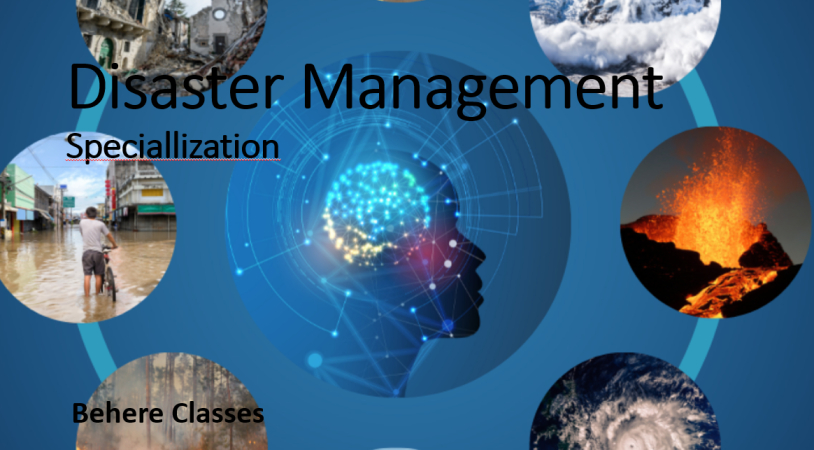
Explore Disaster Management Engineering
Sectors included in infrastructure engineering:
1. Emergency Services: Fire, medical, and rescue operations.
2. Government and Public Policy: Disaster planning, response coordination, and relief management.
3. Construction and Infrastructure: Building resilient structures and disaster-proof infrastructure.
4. Environmental Management: Addressing environmental risks and recovery efforts.
5. Insurance and Risk Management: Assessing and mitigating disaster-related risks.
6. Non-Governmental Organizations (NGOs): Humanitarian relief and disaster recovery.
7. Technology and Data Analytics: Developing tools for disaster prediction and response.
8. Healthcare: Managing public health in emergencies.
Duration & course Level:
1. Emergency Services: Diploma/Certificate, 6 months-1 year.
2. Public Policy: Bachelor’s/Master’s, 3-5 years.
3. Infrastructure: Bachelor’s/Master’s, 4-6 years.
4. Environmental Management: Master’s, 1-2 years.
5. Risk Management: Bachelor’s/Master’s, 3-5 years.
6. Humanitarian Aid: Certificate/Master’s, 1-2 years.
7. Tech & Data Analytics: Master’s, 1-2 years.
8. Healthcare: Bachelor’s/Master’s, 4-6 years.
Specializations:
1. Emergency Services Management
2. Public Policy and Disaster Response
3. Infrastructure Resilience and Recovery
4. Environmental Disaster Management
5. Risk and Crisis Management
6. Humanitarian Assistance and Disaster Relief
7. Data Analytics in Disaster Response
8. Healthcare Disaster Preparedness
9. Climate Change and Disaster Risk Reduction
10. Urban Disaster Management
Education & Training Requirements.
1. Bachelor’s Degree: In Disaster Management, Civil Engineering, or Environmental Science.
2. Master’s Degree (Optional): In Disaster Management, Emergency Services, or related fields.
3. Core Courses: Risk assessment, emergency planning, disaster recovery.
4. Certifications: FEMA, Red Cross, or regional certifications.
5. Practical Training: Internships, field training, disaster simulations.
6. Continuing Education: Workshops and specialized certifications.
Salary Package: (per year)
1. Disaster Risk Consultant: $60, 000 - $90, 000 per year
2. Emergency Management Specialist: $50, 000 - $80, 000 per year
3. Disaster Recovery Coordinator: $55, 000 - $85, 000 per year
4. Infrastructure Resilience Engineer: $70, 000 - $110, 000 per year
5. Urban Planner: $60, 000 - $95, 000 per year
6. Crisis Response Engineer: $65, 000 - $100, 000 per year
7. Hazard Mitigation Specialist: $55, 000 - $85, 000 per year
8. Environmental Planner: $60, 000 - $90, 000 per year
9. Disaster Preparedness Trainer: $50, 000 - $75, 000 per year
10. Public Safety Officer: $45, 000 - $70, 000 per year
11. Disaster Response Engineer: $65, 000 - $100, 000 per year
12. Climate Risk Analyst: $60, 000 - $95, 000 per year
13. Flood and Earthquake Risk Engineer: $70, 000 - $110, 000 per year
14. Humanitarian Logistics Coordinator: $50, 000 - $80, 000 per year
15. Business Continuity Planner: $55, 000 - $90, 000 per year
16. Disaster Policy Analyst: $60, 000 - $85, 000 per year
17. Environmental Risk Engineer: $65, 000 - $95, 000 per year
18. Structural Safety Engineer: $70, 000 - $100, 000 per year
Industrial Overview:
Disaster management plays a crucial role in reducing the impact of natural and man-made disasters. It involves risk assessment, emergency planning, and recovery across sectors like government, healthcare, and construction. With rising demand due to increasing disasters, the field is driven by advancements in technology such as predictive analytics and GIS mapping, essential for public safety and infrastructure resilience.
Industry/Field Future:
The future of disaster management will focus on technology, data analysis, and climate adaptation to address the rising frequency of natural disasters. Innovations like AI for predictive modeling, drones for real-time surveillance, and improved communication systems will enhance emergency response efforts. Professionals skilled in risk assessment, urban planning, and infrastructure resilience will be crucial in helping communities prepare for and recover from disasters, with growth expected across sectors such as urban development and public health.
Behere Classes of Science & Commerce for 11th, 12th, PCMB, , CET, NEET, JEE, CAF
Behere Classes Best 11th 12th Science Commerce Coaching in Pune NEET JEE CET PCMB, CA Foundation